Your How-To Sand Tray Therapy Guide for In-Person and Virtual Sessions
Maybe you've seen sand trays in other therapy offices or online, or even dabbled in it yourself. But can this intervention actually support client goals? Is it worth the mess or effort? Does it work when you're on the go, visiting clients in schools and homes, or providing virtual sessions?
Yes, yes, and yes! (Plus, let's admit it, sand trays are pretty fun for therapists too.)
There is a unique type of therapy called Sandplay that we'll come back to, but the use of sand tray therapy is not limited to one intervention. It's a tool that can be used in all kinds of modalities, including play therapy, art and expressive therapies, and even cognitive therapies like CBT and ACT. And of course there are many benefits for IFS! Think of just about any type of psychotherapy and you can likely integrate sand tray in some way.
Here's how I explain it to my clients:
Sand tray therapy is a fun and symbolic way to express yourself. You're given a shallow tray full of sand and a collection of miniatures that can represent feelings, ideas, or actual situations and people. It can help you express yourself, work through past memories, or just relax and destress. Some people mostly play in the sand, while others create scenes or worlds with the miniatures. What you do with it is up to you and what you need in the moment.
What is the Theory Behind Sand Tray?
Sand tray was developed by child psychology specialist Margaret Lowenfield who introduced the theory that children better express themselves through play and senses versus words. The idea was inspired by her observations of how children naturally play. (Lowenfield Trust, 2026). The process of using the sand to create scenes was named the World Technique.
An important part of Lowenfield's approach was to allow a child to communicate to the therapist through play, rather than "telling the child what they think" (Woodcock, 2024). The overall idea is that the child is the boss, and the therapist is there to support and observe.
The principles behind the World Technique were later developed into a therapy formally called Sandplay by Dora Kalff (1966). Her theory combined Lowenfield’s work with Jungian and Buddhist principles (Heiko, 2024). She emphasized that the contained space of the tray provides a sense of safety that allows clients to externalize internal experiences.
Today Sandplay remains a specific therapy, while the tool of sand tray is used separately across many modalities, often integrated into trauma-focused therapy, CBT, and somatic approaches (Roesler, 2019).
How Sand Tray Therapy Shows Up in Practice
To help you better understand the use of sand tray therapy, I'll walk though how it shows up in my own practice. I work with all ages, often on topics of anxiety, trauma, relationships, and self development. Here are some of the common ways a therapist might make use of sand tray in their work.
"I've used sand tray to help build rapport in early sessions with many different clients. These days I only provide telehealth so I use a virtual sand tray that includes miniatures as well as actual tactile interaction with the sand."
Building Rapport
I’ve used sand tray to help build rapport in early sessions with many different clients. These days I only provide telehealth so I use a virtual sand tray that includes miniatures as well as actual tactile interaction with the sand. Here are a few examples to illustrate how the sand tray can help with building relationships.
- Younger Kids: Sand tray is a great way to help children around ages 8 to 9 get more comfortable in sessions. The sand tray sets the tone that they’re not going to be in trouble or have to “explain” themselves. It’s a gentle way to ease into sessions.
- Pre-Teens & Teens: I often use sand tray as a way for us to get to know each other. I might ask a client to choose 5 to 6 miniatures that show their interests or likes. This activity has never gone wrong. People like to share their interests!
- Adults: Some adults, particularly in early adulthood, feel uncomfortable expressing themselves. I’ve found that pulling up the sand tray is a great way to help them get comfortable and open up.
- Neurodivergent Clients: Each person expresses differently, and those on the autism spectrum and others who are neurodivergent may find it easier to get acclimated with a more visual or touch-based tool. Sand tray is an awesome option.
Identifying Goals and Values
Once clients are more comfortable with me and the process of therapy, our next step is to identify the ways they can benefit. The symbolic nature of sand tray may help people explore what’s most important to them and what they want to get out of the experience. For example, they might be drawn to miniatures that represent values, success, or security. This naturally opens up conversations about what’s most important to them, which we can then start to develop into specific goals.
Processing
- Adults: Perhaps one of the most obvious uses of sand tray is to help people process experiences. It can even lead to significant epiphanies about areas they may have felt stuck in before.
- Kids & Teens: With kids as well as teens, it may look different. I lean more into Lowenfield’s ideas here, applying less interpretation and more observation. The relationship they build with me and the validation they get through simply having an engaged witness is the key.
- TF-CBT: Sometimes sand tray can be used as a more targeted tool for processing. For example, in my work with trauma-focused CBT (TF-CBT), I’ve offered sand tray as a way for clients to create their trauma narrative. However, this should be done within the context and training of specific therapies such as TF-CBT.
Getting “Unstuck”
“Sand tray is a powerful nonverbal tool that can help clients access a different part of themselves, often a more grounded and neutral part, that may have more answers.”
Do you ever find that you get to an impasse with client work? Sand tray is a powerful nonverbal tool that can help them access a different part of themselves, often a more grounded and neutral part, that may have more answers. Through this process, the adult experience often becomes more like the process I use with children. I return to simply being present and observing, supporting them in their own internal journey.
Couples & Family Work
I’ve also used sand tray with families and even couples. I typically create prompts, such as asking them to create their ideal vacation together, or having each person choose a miniature that represents their role in the family group. Sometimes one person in the family is less active or represented, so I make sure to facilitate their involvement and validate their participation in the process.
Ultimately, you’ll begin within your own modality and work out from there. I’d suggest you start with some beginner sand tray courses to get the general idea, and then look for courses that are specific to your framework. Many experts also suggest you participate in the process yourself, which could be through your own therapy, classes, or supervision sessions.
Tools & Trays for Sand Tray
So once you’re ready to start using sand tray in-person or online, how do you actually set it up? Here are a few options to consider, depending on the ways and places you provide therapy.
- In-Office Trays: The traditional tray is wooden with the floor and sides painted blue to represent water and sky. Miniatures are set up on shelves or categorized drawers for clients to look through. You may also have a smaller tray for clients to move around the area and collect any miniatures they’re interested in to place in the sand when they’re ready.
- Miniatures: There are many miniatures that run $5 or more each, and sometimes they’re worth it for specific purposes. But generally therapists find minis from old toys at home, garage sales, and dollar/discount stores. You can also use printable miniatures like this set.
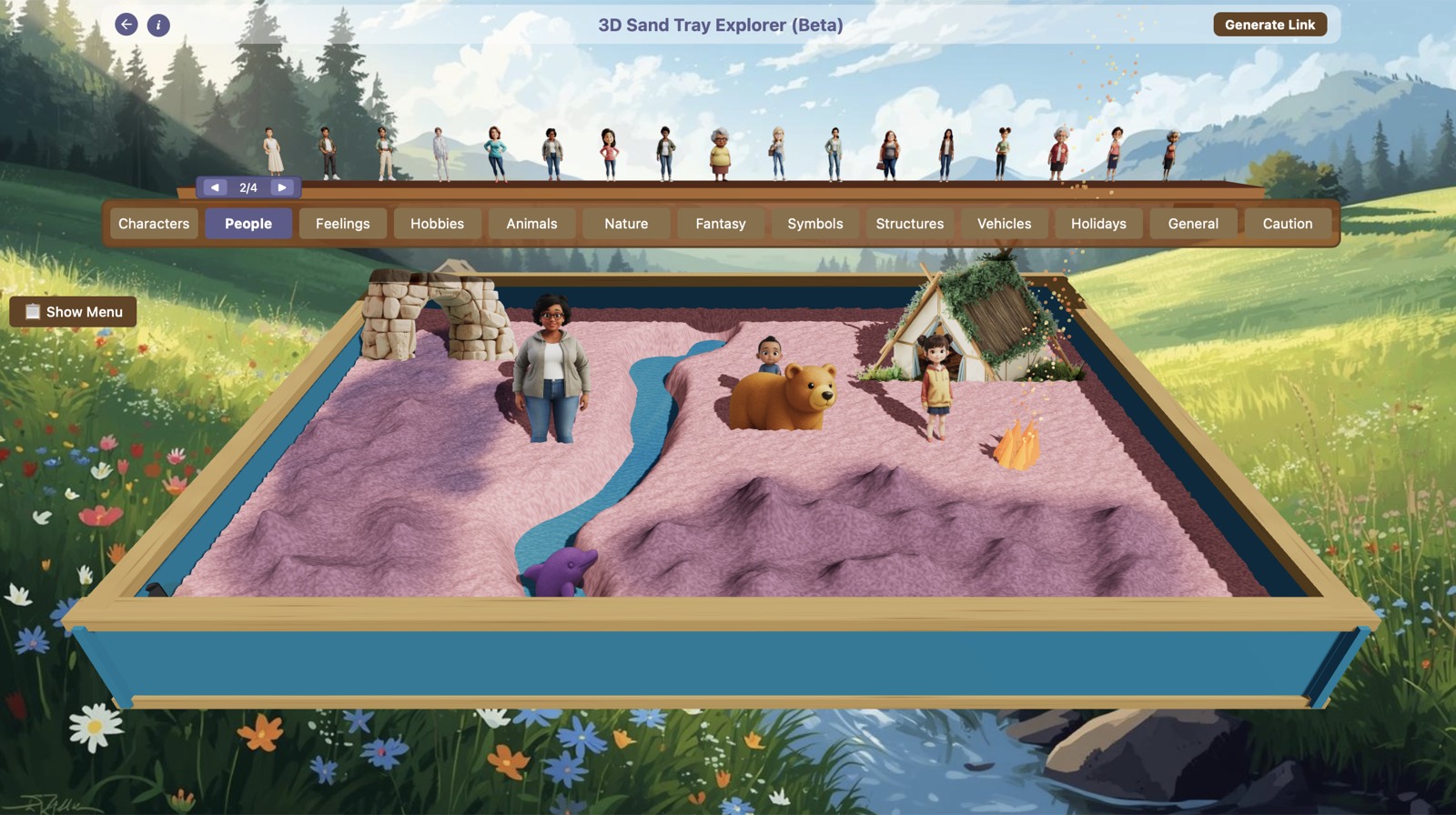
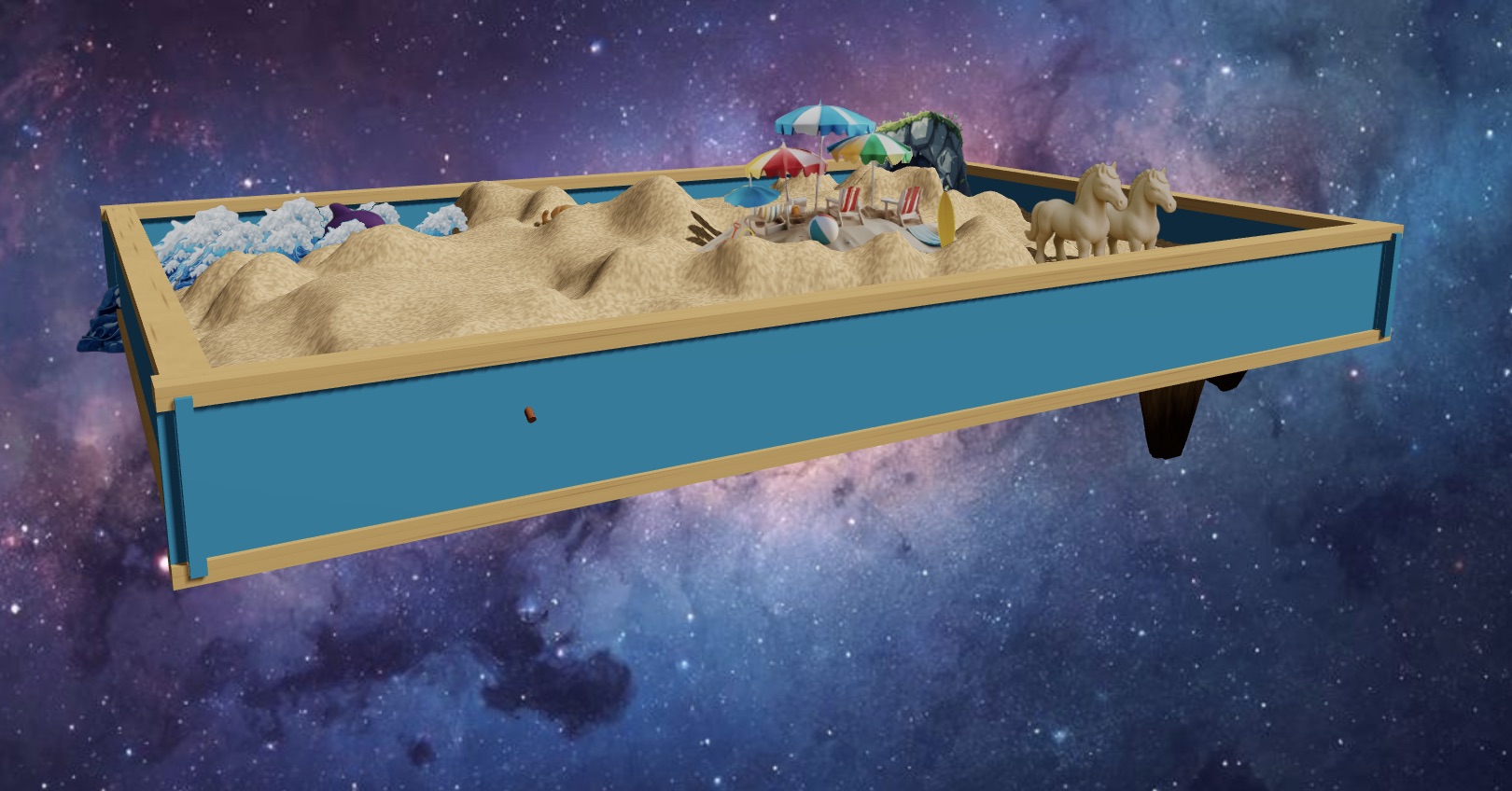
- Virtual and Online Sand Trays: Since I work all online now, I’m partial to online trays. Virtual sand trays offer many of the same benefits of physical trays (and more), and can be used online or in-person. The 3D Sand Tray Explorer allows clients to mold and sift sand, bury or float miniatures, and create flowing rivers or ponds.
- Physical Portable Trays: If you move around to different schools or visit clients at home and don’t have a convenient device setup for virtual sand tray use, you can create a physical travel version. You can get a lot done in a shallow plastic container with kinetic sand. Alternative options are to use Jasmine rice (less messy than other types of rice) or small beans to avoid sand spill. To carry more miniatures, use printable miniatures like this set.
- Client Custom Home Trays: A last option that’s a bit tricker to pull off but doable is to have your client create a tray at home. With younger kids you will need a caretaker’s help with this and a plan for safely saving the setup between sessions. They can use any tray at home (even an old baking dish will work) and add their own sand, salt, rice, beans, confetti or just about anything that will support standing miniatures.
The 3D Sand Tray Explorer offers many benefits of physical trays, with sculptable sand, flowing water, and the ability to bury miniatures.
Clients then collect small toys and figurines that are important to them, along with natural elements like rocks, twigs, and shells. They can also print or make their own miniatures by drawing and cutting them out. You can make one of your sessions just about creating the miniatures. An alternative option is to use Legos or blocks along with miniatures, particularly if clients have one of those flat square Lego bases. They can combine lego pieces along with standable miniatures.
Home trays can work amazingly for teenagers and adults, and the right younger clients who may be a bit more organized or have parent or sibling help. They can be a bit more labor intensive and difficult to manage for younger kids who get distracted during the play or setup. Just be cautious that they don’t end up with the sand and miniatures strewn about between sessions!
Getting Started
If you've never used sand tray before I'd recommend you start with finding a basic training online or in your area. You can also begin exploring yourself with this 3D sand tray online. You'll definitely get the idea with the symbolic miniature setup and virtual sand. For specific session ideas, check out our 101 sand tray therapy prompts organized by modality. If you're interested in learning more about the features and functionality of virtual sand trays, read our guide on using the 3D Sand Tray Explorer.
Sources
- Dr. Margaret Lowenfield Trust (2024)
- Kallf, D. (1966). The Archetype as a Healing Factor, Psychologia.
- Heiko, R. (2024). History of Sandplay Therapy
- Roesler, C. (2019). Sandplay therapy: An overview of theory, applications and evidence base. The Arts in Psychotherapy.
- Woodcock, R. (video presentation). Margaret Lowenfield's World Technique. Dr. Margaret Lowenfield Trust.
About the Author
Jennie Lannette Bedsworth, LCSW is a licensed therapist and the creator of The Counseling Palette, a trusted source for therapy games, group therapy activities, and printables. With two decades of experience in the mental health field, Jennie designs printable and online resources that make therapy engaging, effective, and accessible for all ages. Browse our collection of online therapy tools for meaningful connection at OnlineTherapyTools.com.